
Get Optimum HVAC Efficiency with a Whole-House Heating and Cooling Strategy
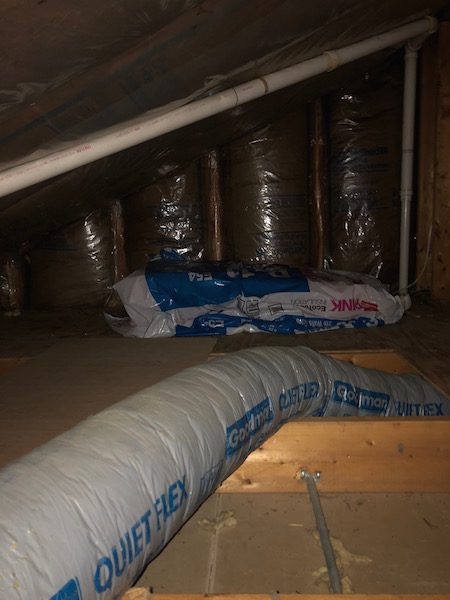
Now that you’ve got a fancy new central HVAC system humming away in your home, don’t make the mistake of assuming that’s all you need for optimum performance, energy efficiency and indoor air quality. In order to accomplish these important goals for your home, you’ll need to take a whole-house approach. This means your energy efficient, well-maintained HVAC system must work hand-in-hand with other components and conditions in your home: effective air sealing, insulation and ventilation combined with responsible and knowledgeable energy use and maintenance by you and your whole family.
Energy Efficient HVAC Equipment
Modern furnaces, ACs and heat pumps are much more efficient than their predecessors, with impressive technological improvements even over the past 10 years. HVAC technology has kept pace with, and in some ways surpassed, minimum energy-efficiency standards set and enforced by the federal government. When shopping for a new cooling or heating system, discuss with your trusted HVAC company which energy-efficiency level makes the most sense for home and budget, as well as for the climate you live in. Depending on where you live and how extreme the summer and winter temperatures, you may not need to invest in the highest-efficiency HVAC equipment. For example, someone who lives in Florida probably can get by with a medium-efficiency furnace. In Ohio, though, with temperature extremes occurring in both the cooling and heating seasons, high-efficiency equipment for both processes makes sense when it comes to long-term energy savings.
Regular Maintenance, Both Pro and DIY
Any sort of HVAC system will perform more efficiently and effectively if it receives regular maintenance. This means frequent air filter replacement and care in avoiding blocked vents and registers (both of which the homeowner can handle). Ideally, each part of the system (cooling and heating) should also have professional maintenance performed annually to check the safety and functioning of the more sophisticated elements of the system. Typically, a homeowner will schedule maintenance on the heating system in the fall before temperatures begin plummeting, and on the cooling system in the springtime before it starts getting hot.
Home Weatherization: Air Sealing and Insulation
Even the most modern, quality HVAC system won’t deliver optimum results if your home isn’t properly weatherized. Conditioned air that escapes into unconditioned areas or outside the house isn’t doing you any good, and that problem will be reflected in higher energy bills and unbalanced heating and/or cooling. It’s important to find where air is leaking from your home, especially on its outer perimeter and between the living spaces and the attic or other unfinished interior spaces. Depending on the location and size of the leak, you can use weatherstripping, caulk or spray foam to seal it. Insulation also plays a vital role in whole-house energy efficiency. A house with inadequate or missing insulation in its walls, attic, ducts and other areas will be more difficult to heat and cool. The equipment will have to work harder to accomplish the same desired target temperature as it would if your home were properly insulated. An energy audit conducted by a trusted HVAC company will determine where and how air or heat energy is escaping or entering your home.
Smart Energy Habits
This part is completely up to you. The final ingredient to whole-house energy savings and comfort is your own wise management of the system and your home. This includes responsible temperature control (don’t try to cool your home to 68 degrees on a day when it’s 100 degrees outside); taking advantage of cooler nighttime temperatures (and giving the equipment a break) by opening windows; closing curtains or drapes to the sun on hot days; installing and using a programmable thermostat; and employing ceiling fans to make the home feel cooler instead of lowering the thermostat setting. These are just a few of many steps you can take to help your HVAC system work to its best possible capacity. You can even consider altering your own heating and cooling habits. Try turning the AC thermostat up to 76 in the summer, for example, and you might just find that adapting to a warmer house in the summer isn’t that difficult. Likewise, try setting the temperature to a few degrees cooler than customary in the winter and putting on a sweater!
If you’re here in Cincinnati, call us to learn more about how to optimize your HVAC system. We can help you to develop energy smart strategies and identify problems that might be costing you money and comfort in your home. Here at Jansen, we’re a trusted, local HVAC company committed to providing top-notch service to Cincinnati homeowners to minimize headaches and maximize customer satisfaction.